
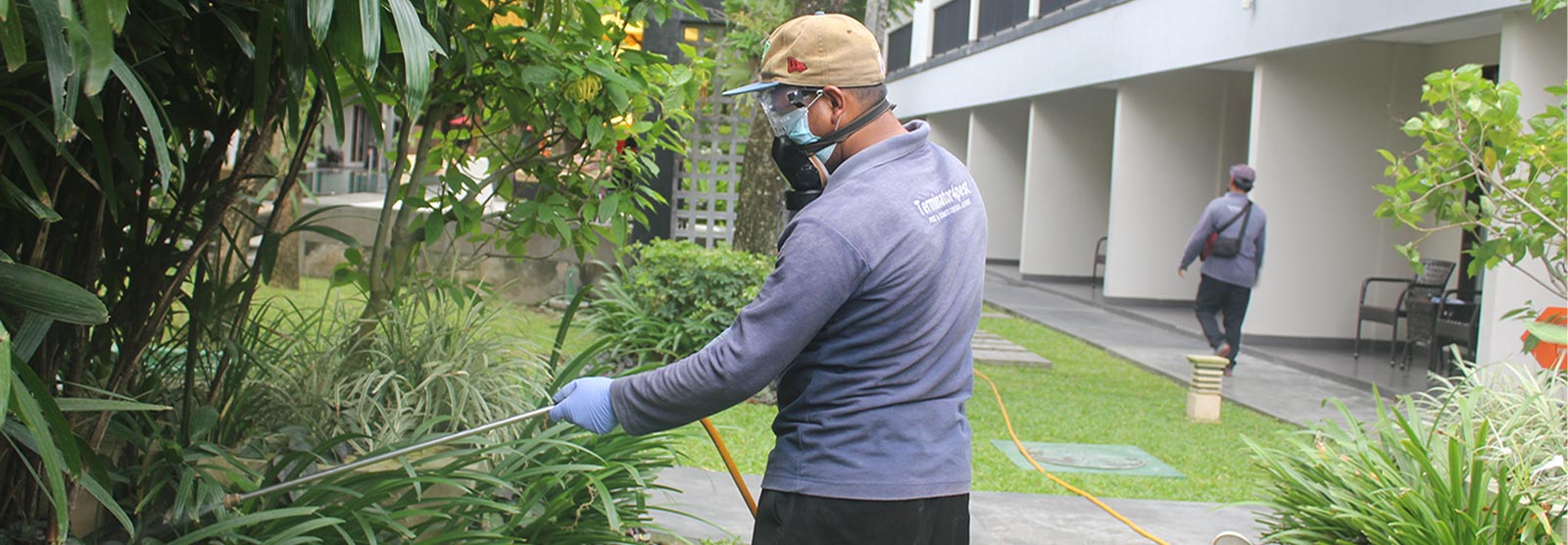
In this article the T4P Pest Control Bali Team put together all needed information about mosquitoes and what can be done about them.
What are we dealing with here?
What are mosquitoes?
Mosquitoes are small, flying insects that are related to flies. They have a long, thin body and a pair of wings. They are found in tropical and subtropical areas like, so the weather conditions in Bali are perfect for them. They are a major annoyance to people because they feed on human blood.
What do mosquitoes do?
Mosquitoes are attracted to the carbon dioxide that we exhale, as well as the warmth of our bodies. When they land on us, they insert their long, thin mouthparts into our skin and begin to feed. This process is called ‘taking a blood meal’.
What are the dangers of mosquitoes?
Although they are small, mosquitoes are responsible for a huge number of deaths each year. This is because they can transmit diseases such as malaria, yellow fever, dengue fever, and encephalitis. In tropical and subtropical areas, mosquitoes are a major problem. They breed in stagnant water, such as ponds and puddles, and their larvae develop quickly into adults. This means that there is a constant supply of mosquitoes ready to bite people and transmit diseases.
Mosquitoes are a particularly big problem in Africa, where they transmit diseases such as malaria and yellow fever. These diseases cause fever, vomiting, and sometimes death. In 2015, there were estimated to be 214 million cases of malaria, and 438,000 deaths. This is a huge burden on healthcare systems, and on the families and communities affected.
How can we prevent mosquito bites?
The best way to prevent mosquito bites is to avoid areas where they are found. If you are travelling to a tropical or subtropical country, make sure you have good insect repellent and wear long sleeves and trousers to cover your skin. If you are living in an area where mosquitoes are a problem, make sure you empty any stagnant water around your home, as this is where they breed. You can also use mosquito nets and insecticide sprays to keep them away from your home.
Contact us now to have an expert of the T4P Pest Control Bali Team come over for a free evaluation!

Pest Control Bali – Mosquito Traps
A mosquito trap is a device used to catch mosquitoes. There are many different types of mosquito traps, but most work by attracting mosquitoes with a food source or a combination of carbon dioxide and heat, then trapping them. Some mosquito traps use an attractant, such as a sugar water or protein solution, to draw mosquitoes in. Once the mosquito lands on the trap, a mechanism closes the opening, preventing the mosquito from escaping. Other mosquito traps work by produces CO2, which is similar to the exhaled breath of humans. This gas attracts mosquitoes, who are then drawn into the trap where they are caught on a sticky surface or in a net.
Mosquito traps can be purchased commercially or made at home. Commercial mosquito traps are often more expensive but more effective than homemade traps. Homemade mosquito traps can be made from a variety of materials, such as plastic containers, buckets, or tires. To be effective, mosquito traps must be placed in areas where mosquitoes are known to congregate, such as near standing water or in dense vegetation. Traps should be checked regularly and emptied of mosquitoes to prevent them from escaping.
At T4P Pest control Bali we have been using mosquito traps for many years to effectively control the mosquito pests of our customers in Bali. We use a variety of mosquito traps that are specifically designed to target and kill mosquitoes. The traps are placed in strategic locations around the property where mosquitoes are known to be a problem. We have a team of trained and experienced professionals ready to help you out.
Pest Control Bali – Larviciding
Larviciding is the process of killing mosquito larvae before they have a chance to mature into adults. This is typically done by using a pesticide or a biological agent that specifically targets mosquito larvae. Larviciding can be an important part of mosquito control, as it can reduce the mosquito population before adults have a chance to mate and lay eggs. This can help to prevent or reduce the spread of diseases like Zika virus and malaria.
Larviciding can be done using a variety of methods, including chemicals, biological agents, and even physical methods like draining standing water. Chemical larvicides are typically used in small, controlled areas where mosquito larvae are found, such as stagnant pools of water. Biological larvicides, on the other hand, can be used in larger areas and are typically more effective at longer-term mosquito control.
Bacillus thuringiensis israelensis (Bti) is a common biological larvicide that is used in both indoor and outdoor areas. Physical methods of larviciding, like draining standing water, can be used in conjunction with chemical or biological methods. It is important to note that not all mosquitoes breed in standing water; some mosquitoes, like the Aedes aegypti, can breed in even small amounts of water that are found in households. Larviciding can be an effective tool in controlling the mosquito population, but it is not a silver bullet. It is important to use other methods of mosquito control in conjunction with larviciding, such as removing standing water, using mosquito nets, and wearing long sleeves and pants.
Here at T4P Pest Control Bali we have a team of experts who have a lot of experience using the larviciding method against mosquitoes. This method is considered to be one of the most effective ways to control the spread of mosquitoes and to prevent them from causing diseases. We use a special Larvicide that is specifically designed to kill mosquitoes. This Larvicide is made from a natural compound that is safe for humans and animals.
Pest Control Bali – Thermal Fogging
The process of thermal fogging creates a mist or fog of ultra-fine droplets that quickly disperses, providing an effective means of treating large areas for mosquitoes. The droplets remain suspended in the air for a period of time, providing extended contact time with the target insects. Thermal foggers use heat to create the fog, and can be either propane-powered or electrically powered. Thermal fogging is an effective way to quickly kill mosquitoes over a large area.
The ultra-fine droplets created by the fogger will remain suspended in the air for a period of time, providing extended contact time with the target insects. Thermal foggers use heat to create the fog, and can be either propane-powered or electrically powered. When using a thermal fogger, it is important to use an insecticide that is specifically labeled for use in a thermal fogger.
The fogging process creates very fine droplets that can easily be inhaled, so it is important to use an insecticide that is safe for humans to breath. Thermal fogging is most effective when the temperature is above 60 degrees Fahrenheit and there is little wind. The fog will disperse quickly in windy conditions and will not be as effective in cooler temperatures. To prepare for thermal fogging, the area to be treated should be clear of people and pets.
All windows and doors should be closed and any air conditioning units turned off. The fogger should be placed in the center of the area to be treated and the Insecticide label directions followed. Once the fogging is complete, the area should be ventilated by opening doors and windows. People and pets should not be allowed back into the area until the fog has dispersed and the area is well ventilated.
At T4P Pest Control Bali we use the newest mosquito fogging machines on the market, they are designed to kill mosquitoes even quicker and efficient then normally. The use of the machines is safe for humans and animals, and is very effective at controlling mosquito populations in areas where it is used.
Pest Control Bali – ULV and Misting
The process of ultra-low volume (ULV) spraying for mosquitoes is a method used to apply small droplets of insecticide to the air in order to kill flying mosquitoes. ULV spraying equipment is designed to produce a very fine mist or fog of insecticide droplets that remain suspended in the air for a period of time. The droplets of insecticide in the ULV mist are small enough to float and drift on air currents, which allows them to travel long distances from the application site.
The size of the droplets in a ULV spray is typically between 0.5 and 150 microns. Smaller droplets (0.5-10 microns) stay suspended in the air for long periods of time and can drift with the wind for great distances. Larger droplets (10-150 microns) quickly fall to the ground and are not carried by the wind. The main advantage of ULV spraying for mosquitoes is that it allows for a very large coverage area with a small amount of insecticide. When used properly, ULV spraying can be an effective tool for controlling adult mosquito populations.
The process of misting against mosquitoes is a method used to apply small droplets of insecticide to the air in order to kill flying mosquitoes. Misting equipment is designed to produce a very fine mist or fog of insecticide droplets that remain suspended in the air for a period of time.
The droplets of insecticide in the mist are small enough to float and drift on air currents, which allows them to travel long distances from the application site. Misting provides a number of advantages over other methods of mosquito control, such as using mosquito nets or insecticide-treated mosquito bedding. Misting allows for a more targeted application of insecticide, as the droplets can be directed to specific areas where mosquitoes are known to congregate. Additionally, misting provides a longer-lasting protection against mosquitoes, as the insecticide droplets remain suspended in the air and continue to kill mosquitoes that come into contact with them. When used properly, misting can be an effective tool for controlling adult mosquito populations.